Memories have an expiration date.
I've been thinking about that a lot lately.
Visiting familiar places, reminiscing about past events, and immersing myself in nostalgia.
It seems like something I can do anytime.
But I also feel like I was only able to genuinely feel nostalgia when I was younger.
Familiar Places Become Part of Everyday Life
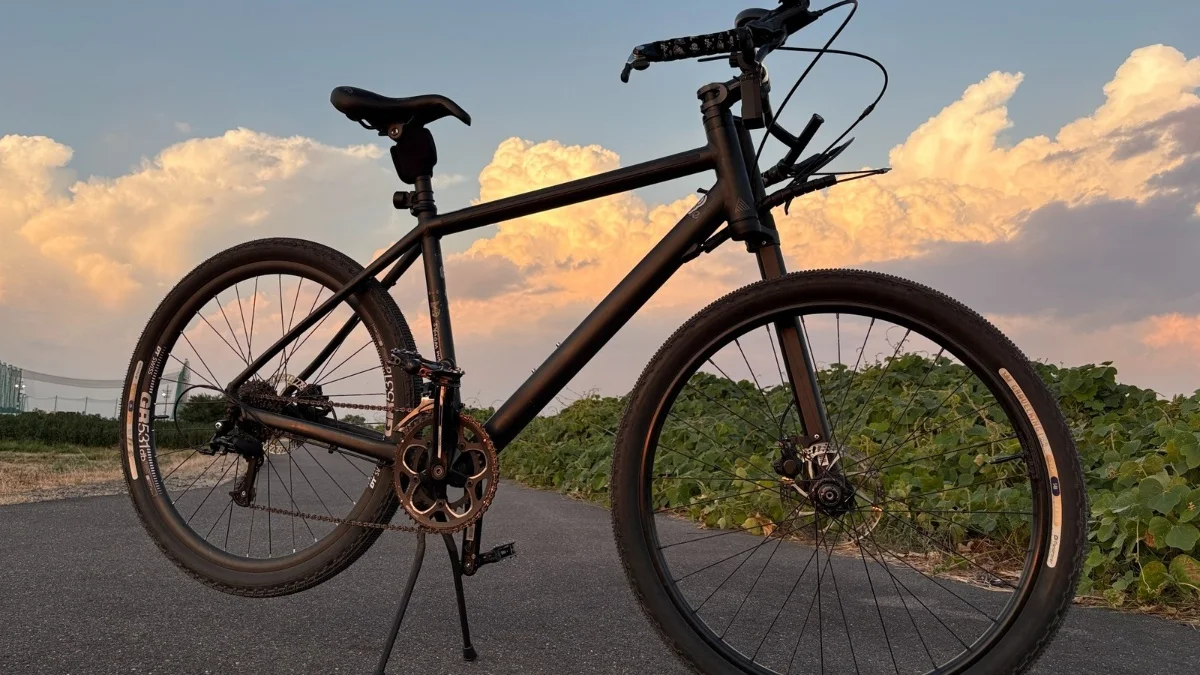
Since I started using my bicycle more often, I've been freely and unrestrainedly riding around various parts of Nagoya.
You stop at places you'd normally pass by in a car or train, turn onto any road that catches your eye, and head towards places that come to mind, using your own strength.
Riding a bicycle instantly shortens the distance to the city.
As the number of places you can go increases, you naturally start going to the same places repeatedly.
Places that were once special.
Places where, upon visiting after a long time, old memories suddenly come flooding back.
As you start visiting such places frequently, the nostalgia gradually fades.
And before you know it, it becomes part of your everyday scenery.
Nostalgia may be preserved by the distance to a place and the time that has passed since your last visit.
It's nostalgic precisely because you haven't been there for many years.
It remains beautifully in your memory precisely because you don't see it often.
Now that it's easy to go and see them by bicycle, memories return to reality, and special landscapes are overwritten by current landscapes.
Immersing oneself in memories is an extraordinary experience.
Immersing oneself in memories is surprisingly an extraordinary act.
When you're caught up in the hustle and bustle of daily life, there's hardly any time to slowly reminisce about the past.
However, when you see a building you used to pass by, stand at an intersection that hasn't changed, or spot a familiar shop sign, it can trigger a flood of memories.
Who was I with back then?
What kind of clothes were they wearing?
What were they thinking, what were they worried about, and what were they dreaming of?
Places and buildings are not just backgrounds.
They are like giant memory devices for storing memories.
However, when the buildings or places that triggered those memories disappear, there's a feeling that the memories themselves easily fade away.
Memories don't completely disappear.
But the key to retrieving them is gone.
And memories that have lost their key gradually fade away, and in the end, they remain dormant as if they've been erased from within oneself.
Vanished Nagoya landscapes
The old Nagoya Station.
Meitetsu Lejac.
The first Dai Nagoya Building.
Annex Building.
Sakae Park before it became known as "Kimutaku Square".
Los Angeles Square in Central Park.
The Chunichi Building before its reconstruction.
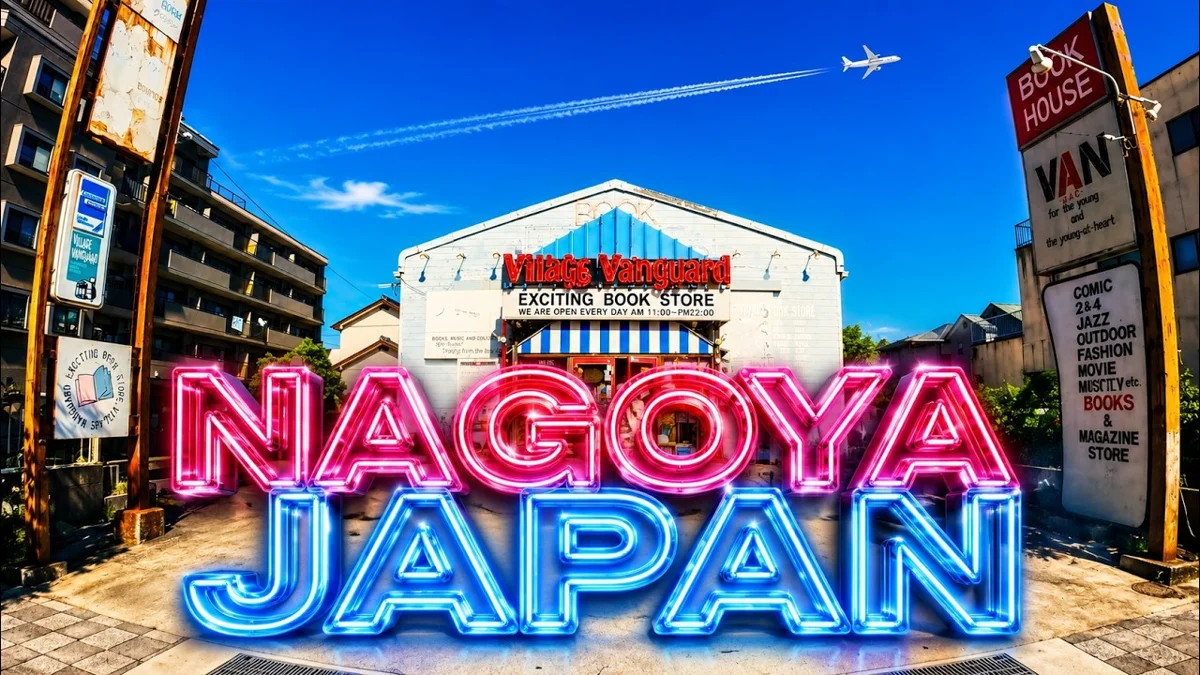
Village Vanguard flagship store.
Places that still exist in my memory, but have gradually disappeared from the real city, are increasing.
I can remember when I look at a photograph.
Sometimes, talking to someone brings back memories.
But I can no longer actually go to that place.
Even if I can go to the same address, what I find there is a different building, a different landscape.
Standing in the same place as before, but seeing a completely different view.
The longer you live in a city, the more strange experiences you have.
Visiting the Village Vanguard flagship store.
Among the places that have disappeared from Nagoya, the Village Vanguard flagship store had a unique presence.
It wasn't just a store selling books and miscellaneous goods; I think simply entering the store was an experience in itself.
Books, music, movies, miscellaneous goods, incomprehensible items, handwritten POP displays.
It's not a place to efficiently buy what you need.
You wander around the store so much that you forget what you were looking for, and end up buying things you didn't plan to.
I think that chaotic space itself was what Village Vanguard was all about.
When I learned that the flagship store, which had been a beloved landmark for 40 years, was closing, I cycled to the first store in Tenpaku Ward.
And I bought a T-shirt as a memento.
As an object, it's just a T-shirt.
But in a few years, or even decades, when I look at that T-shirt, I might remember that day.
The road I cycled down.
The exterior of the store.
The atmosphere inside the store.
People lamenting the closure.
A slightly sad feeling, as if a culture is disappearing from the town.
Even if buildings and shops are gone, images, words, and the things we keep become keys to recalling those memories.
The events of this day are also available on YouTube.
"I bought a T-shirt! Village Vanguard's flagship store, loved for 40 years, is closing? | A talkative ride to the first store in Tenpaku Ward"
I bought a T-shirt! Village Vanguard's flagship store, beloved for 40 years, is closing? | A storytelling ride to the first store in Tenpaku Ward — Watch on YouTubeThis video will likely have a different meaning in a few years.
Immediately after its release, it was just a video documenting the closure of a store.
However, with time, it will become footage that preserves the past of Nagoya, including the streetscape, roads, store appearances, and even people's clothing.
That's why I film videos.
It's not because of any particular incident.
It's because I realized that the scenery before my eyes now won't last forever.
When something disappears, something new will be created.
However, I don't think that the disappearance of old things is always a sad thing.
When something disappears, something new will be created.
New things have their own merits.
Sometimes I think things were better in the past, and other times I feel that things have become more convenient with the new developments.
While I want to preserve old buildings, I also welcome new facilities that are clean and easy to use.
Humans are quite selfish creatures.
But I think that's okay.
A city is not a museum.
It is a place that is constantly changing as people live, work, play, and move around.
Old things disappear, new things are born, and someday those too will become old and disappear again.
Times change, and nostalgia fades away.
And that's okay too.
Change in just half a century.
All of these things have happened during my lifetime.
Even though I've only lived for about half a century, the Nagoya I saw as a child and the Nagoya of today are quite different cities.
If my past self were to see present-day Nagoya, there might be places that I wouldn't immediately recognize as the same city.
Conversely, if you showed old photos of Nagoya to young people today, they would probably see them as historical documents.
Landscapes that were real to me will become landscapes that never existed to the next generation.
I think that's what time is.
Nagoya 100 Years from Now
Nagoya 100 years from now will have a completely different face.
The roads I'm cycling on now might one day be in a different form.
The buildings, parks, stations, and shops I see every day may almost certainly no longer exist.
Landscapes that are taken for granted now will become "places that apparently once existed" to someone in the future.
When you think about it that way, even ordinary everyday landscapes start to look a little different.
Places I thought I could always see.
Buildings I thought I could photograph another time.
Roads I've traveled so many times I thought they were nothing special.
Even those things definitely have an expiration date.
It's not just the buildings that disappear.
The day will come when you yourself can no longer go there.
Your physical strength changes, your lifestyle changes, your interests change, and the way you see the city changes.
The time we can stand in the same city, as the same people, with the same feelings, is not very long.
Record the city as it is now.
That's why I want to record the city as it is now.
I'm not trying to create a magnificent historical document.
I take pictures of scenery that catches my eye while riding my bicycle.
I talk about things from the past when I remember them.
If there's a building that seems to be disappearing, I stop for a moment and look at it.
I think that's enough.
Even a landscape that seems insignificant now might become a nostalgic landscape in 10 years.
In 20 years, it might not even exist anymore.
And in 100 years, the city of Nagoya itself will look completely different from what it is now.
Memories have an expiration date.
So, savor them before they expire.
While they still feel nostalgic, feel that nostalgia.
Preserve what you can, in the form of photos, videos, and words.
Not to protect the past, but to accept change.
The Nagoya I'm cycling through today will one day become "the Nagoya of the past" for someone else.
Thinking about it that way, even my usual route seems a little more precious.