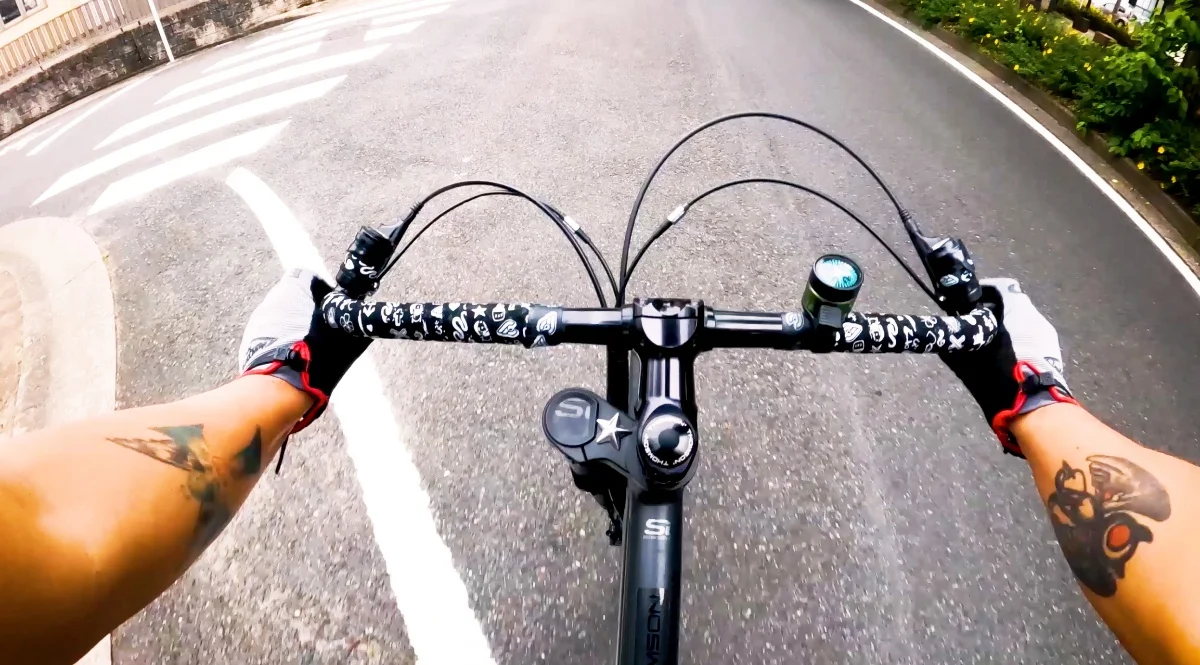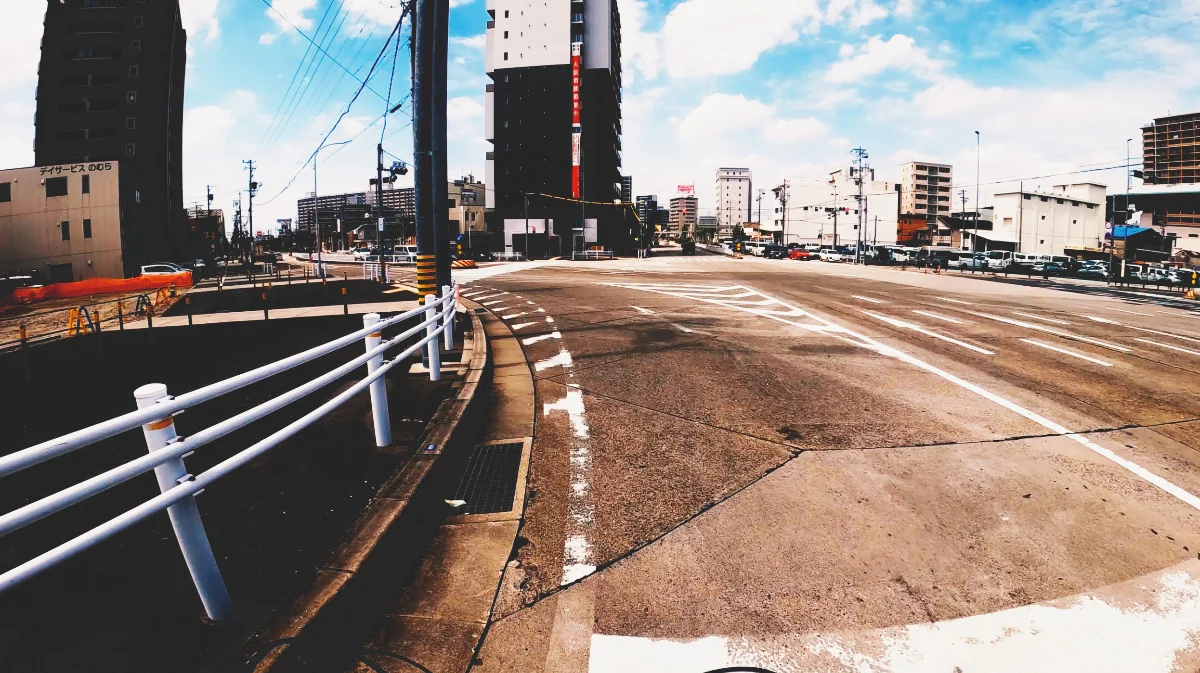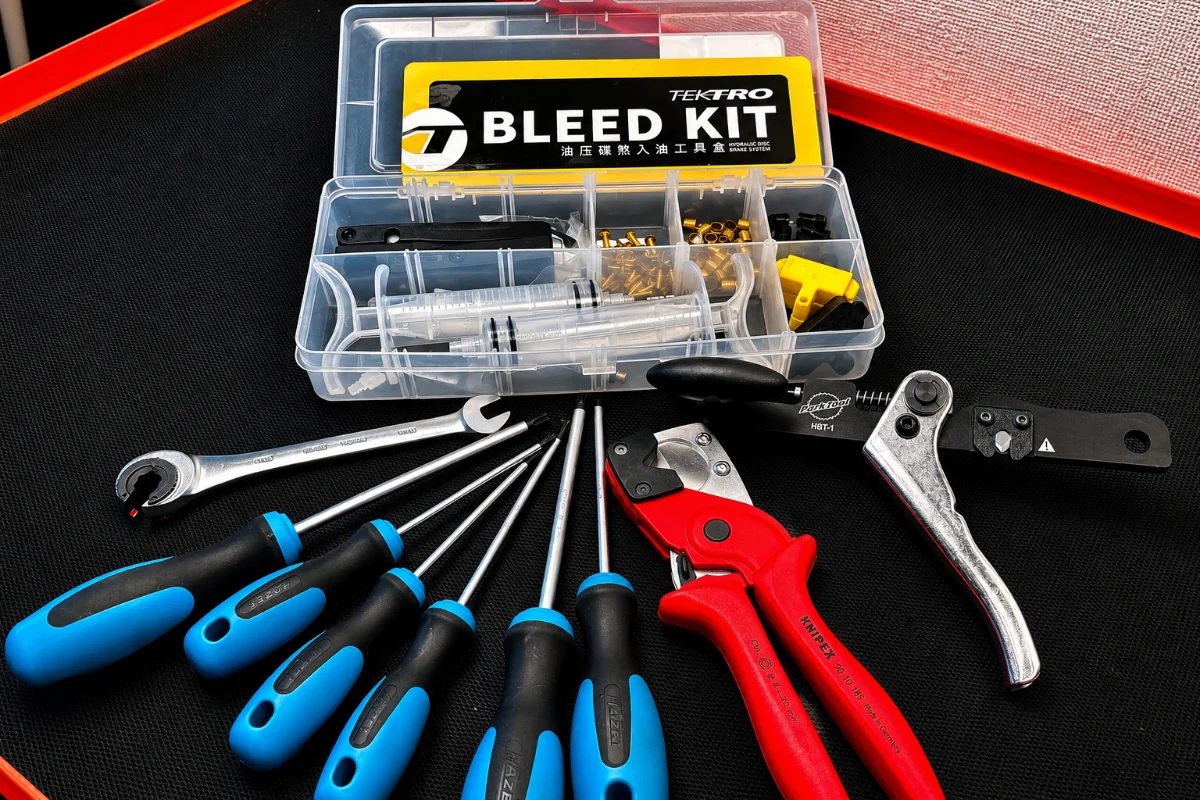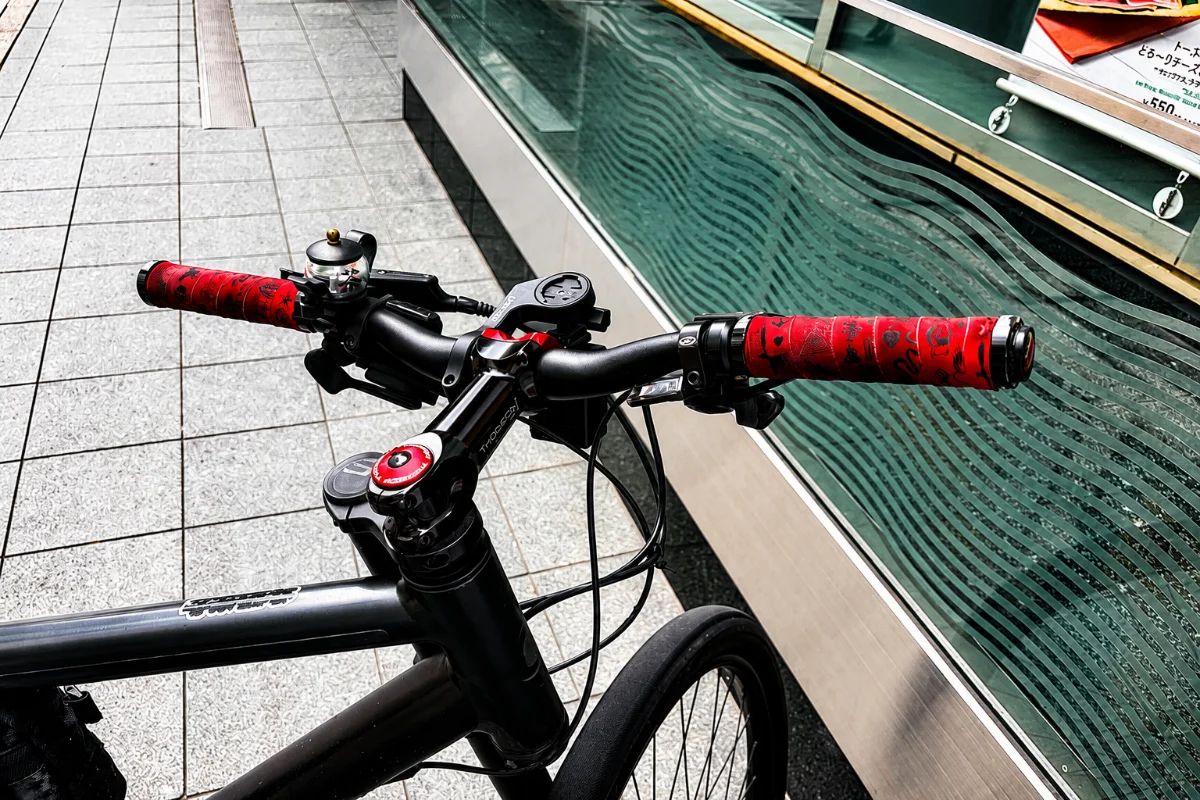
The trigger was the "blue ticket system" that came into effect on bicycles from April 1, 2026.
To be honest, I never intended to make traffic rules the theme from the beginning.
However, a short video I happened to post about bicycle traffic rules went viral.
"Do people really care that much about traffic rules?"
Thinking that, I started researching bicycle traffic rules in detail myself.
I wanted to make it so that I could proudly call it a "regular bicycle."
Cut the handlebars even further! Shortening the handlebars on my Cannondale Bad Boy! The addictive 56.5 cm | SK11 Pipe Cutter — Watch on YouTubeIf I'm going to talk about traffic rules, it's going to be complicated if it's unclear whether my bicycle qualifies as a "regular bicycle."
So, I decided to cut the handlebars on my Cannondale Bad Boy.
The original handlebar width was about 76 cm.
I gradually shortened them from there, finally cutting them down to about 54.6 cm.
Cut the handlebars even further! Shortening the handlebars of a Cannondale Bad Boy to 54.6cm | SK11 Pipe Cutter — Watch on YouTubeThe frame size of a regular bicycle is defined as a length of 190cm or less and a width of 60cm or less.
Since the handlebars are usually the outermost part of a bicycle, I first thought about keeping the handlebar width within 60cm.
Of course, the actual frame width needs to be considered including the outermost parts such as grips, bar ends, and mirrors.
Even so, by shortening the handlebars to 54.6cm, I can now proudly say, "This is a regular bicycle," more so than before.
The blue ticket system hasn't changed the rules themselves.
As I researched traffic rules, I discovered something unexpected.
Starting April 1, 2026, the "Traffic Violation Notification System," also known as the blue ticket system, applies to bicycle traffic violations.
In other words, the introduction of the blue ticket system doesn't mean that all the basic traffic rules for bicycles have suddenly changed.
The majority of the changes are in the procedures and enforcement mechanisms for violations that were already in place.
Despite this, before and after the system's implementation, the internet saw a considerable number of extreme opinions such as:
"Bicycles will no longer be able to ride"
"You'll be fined no matter what you do"
"The rules will suddenly become much stricter"
About four months have passed since the system's implementation.
As long as you're riding around town, the actual landscape doesn't seem to have changed drastically.
However, the content of comments exchanged online has definitely become more in-depth.
Where should you ride?
How should you act at intersections?
Is it okay for bicycles to ride on sidewalks?
What should you do when going straight from a left-turn lane?
People who used to just ride without much thought have started to stop and think.
Even though it may seem like nothing has changed on the surface, I think perceptions are slowly changing.
What I learned from digging into traffic rules
[Owariasahi] The scenery of the Meitetsu Seto Line and rice paddies was amazing. Ride from Yadagawa | POV Bike Ride Nagoya Japan — Watch on YouTubeI didn't anticipate this happening.
Even so, I'm really glad I started studying traffic rules.
Upon investigation, it becomes clear that the cycling environment cannot be explained by a single rule.
Traffic volume and road structure are completely different in urban centers and suburbs.
Population density, volume of cars, number of pedestrians, road width, and time of day.
The degree of danger changes depending on these conditions.
Even in the same bicycle accident, whether you become the perpetrator or the victim depends on where you are riding and how the accident occurs.
The efforts of the national and local governments regarding bicycle infrastructure have become more visible than before.
Arrow-shaped road markings, dedicated bicycle lanes, and intersection design.
Even if it's not perfect, they're not doing nothing.
"There's a big difference between riding knowing the rules and riding without knowing them."
Thinking about it that way, I'm glad that short video went viral.
If that video hadn't gone viral, I probably wouldn't have researched traffic rules this much.
Short handlebars are difficult to ride. But it's easier to pass through.
BIKE COMMUTE #001 | Commuting by bicycle with short handlebars. Riding in Nagoya in the morning and evening. — Watch on YouTubeSo, what was the actual riding experience like after shortening the handlebars?
To be honest, it's more difficult to maneuver than with wider handlebars.
The narrower the handlebars, the quicker the handling feels because the front wheel changes direction with less movement.
It requires a little more concentration, especially at low speeds and when maintaining balance.
Even so, there were clear advantages in urban areas.
It's simply easier to pass through.
The final handlebar width is close to my shoulder width.
Therefore, I found it easier to judge the space for the bike, with the feeling that "if my body can pass, the bicycle can too."
Narrow passages in bicycle parking areas.
Between bollards.
Places where bicycles pass each other.
A scene where you pass a car.
Because only the handlebars don't protrude outwards, you can intuitively judge the width of the bike more easily than before.
The possibility of accidentally hitting pedestrians or car mirrors with the handlebars will also be reduced.
Of course, this is not a customization to force your way through narrow spaces.
It's simply about making it easier to judge the size of the bike while maintaining a safe distance.
The form of a bicycle for riding in the city
Shortening the handlebars had meaning beyond just a change in appearance.
Being aware of the size of a regular bicycle.
Understanding the width of your own bike.
Observing the structure of the city.
Researching traffic rules.
From just cutting the handlebars, the conversation expanded to that extent.
Wider handlebars have clear advantages such as stability and control.
On the other hand, short handlebars offer the fun of compact movement through the city.
There's no right or wrong answer.
Where do you ride, and how do you use your bicycle?
I think it's important to choose the shape that suits your lifestyle and riding environment.
In my case, these short handlebars suited my Cannondale Bad Boy for riding around Nagoya.
The blue ticket system prompted me to research traffic rules, become more aware of the size of a regular bicycle, and adjust my handlebars.
It was a roundabout way that started with a Buzz, but as a result, I was able to engage more deeply with both my bicycle and my riding style than before.
This customization was exactly like that.
Related Videos
The YouTube video introduced in this article is here.
Cut the handlebars even further! Shortening the handlebars on my Cannondale Bad Boy! The addictive 56.5 cm | SK11 Pipe Cutter — Watch on YouTube Cut the handlebars even further! Shortening the handlebars of a Cannondale Bad Boy to 54.6cm | SK11 Pipe Cutter — Watch on YouTube BIKE COMMUTE #001 | Commuting by bicycle with short handlebars. Riding in Nagoya in the morning and evening. — Watch on YouTube [Owariasahi] The scenery of the Meitetsu Seto Line and rice paddies was amazing. Ride from Yadagawa | POV Bike Ride Nagoya Japan — Watch on YouTube